


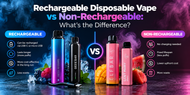
Rechargeable Disposable Vape vs Non-Rechargeable: What’s the Difference?
Posted by JOHN Williams on Sep 27th 2026
2026 Guide: Rechargeable and non-rechargeable disposable vapes use different battery designs and offer different approaches to everyday use. Understanding the differences can make it easier to compare devices and their specifications.
Disposable vapes have evolved significantly in recent years. While early disposable devices were generally designed to be used until the battery or e-liquid was depleted, many modern high-capacity devices now include rechargeable batteries, USB-C charging, displays, adjustable airflow, and other features.
This creates an important distinction between rechargeable disposable vapes and non-rechargeable disposable vapes. Although both are designed around a disposable device format, their battery systems work differently.
In this guide, we explain how rechargeable and non-rechargeable disposable vapes differ, what rechargeable actually means, how charging works, and which specifications are worth checking when comparing devices.
What Is a Rechargeable Disposable Vape?
A rechargeable disposable vape is a disposable-style device that contains a rechargeable battery. Instead of relying entirely on the battery charge supplied when the device is purchased, the battery can be connected to a compatible charging cable and recharged.
Most newer rechargeable disposable devices use USB-C charging. This allows the battery to be replenished while the device still has usable e-liquid remaining.
This design is particularly common among high-puff disposable vapes, where the advertised capacity can be substantially higher than traditional disposable devices.
What Is a Non-Rechargeable Disposable Vape?
A non-rechargeable disposable vape is designed with a battery that cannot be recharged by the user. Once the battery reaches the end of its usable charge, the device is no longer designed for continued use.
These devices generally have a simpler design because they do not need a charging port or charging circuitry intended for repeated charging.
Non-rechargeable devices can therefore be easier to use in one respect: there is no charging process to manage. The device is simply used according to its intended design until it reaches the end of its usable life.
Rechargeable vs Non-Rechargeable Vape: Key Differences
| Feature | Rechargeable Disposable | Non-Rechargeable Disposable |
|---|---|---|
| Battery | Rechargeable | Non-rechargeable |
| Charging Port | Usually included | Generally not included |
| USB-C | Common on newer models | Generally unavailable |
| Battery Can Be Recharged | Yes | No |
| Typical Design | More feature-rich on many newer devices | Usually simpler |
How Does a Rechargeable Disposable Vape Work?
A rechargeable disposable vape contains a battery, heating element, e-liquid reservoir, airflow system, and electronic components. When the device is activated, the battery supplies power to the heating element.
When the battery charge becomes low, a compatible charging cable can be connected to the device's charging port. Once charged according to the manufacturer's instructions, the device can continue operating as long as it still has usable e-liquid and remains within its intended service life.
The important point is that rechargeable does not mean refillable. A device can have a rechargeable battery while still being designed as a closed disposable product.
Does Rechargeable Mean the Vape Lasts Longer?
Not necessarily. Rechargeability primarily refers to the battery, not automatically to the amount of e-liquid inside the device.
For example, a rechargeable device may allow the battery to be charged again while e-liquid remains in the reservoir. A non-rechargeable device may reach the end of its usable life when its battery can no longer provide enough power.
High-capacity devices often combine rechargeable batteries with larger e-liquid capacities and higher advertised puff counts. However, actual usage varies according to the individual device and how it is used.
When comparing devices, it is therefore useful to look at the puff count and battery capacity together rather than assuming that every rechargeable device will automatically last longer.
Why Do High-Puff Vapes Often Use Rechargeable Batteries?
Higher-puff devices can require a larger overall battery capacity or a rechargeable battery system because their advertised usage capacity is much greater than that of traditional disposable devices.
A rechargeable battery allows the device to be charged when its battery level becomes low, assuming there is still usable e-liquid available.
This is one reason USB-C charging has become a common feature on many newer high-capacity disposable vape designs.
USB-C Charging on Disposable Vapes
USB-C has become a common charging connection for modern rechargeable disposable devices. The connector is reversible and is widely used across consumer electronics.
However, charging specifications can differ between products. Always follow the manufacturer's charging instructions and use compatible equipment.
The presence of a USB-C port also does not automatically mean that a device is refillable. Charging and refilling are two completely separate functions.
Rechargeable Does Not Mean Refillable
This is one of the most common points of confusion when comparing disposable vapes.
Rechargeable refers to the battery.
Refillable refers to whether the e-liquid reservoir is designed to be filled again.
A rechargeable disposable vape can therefore have a USB-C charging port while still being a closed device that is not intended to be refilled.
If you are researching rechargeable vs refillable vapes, make sure you are comparing battery functionality separately from e-liquid design.
Which Specifications Should You Compare?
Looking only at whether a vape is rechargeable or non-rechargeable does not provide the complete picture. Modern disposable devices can differ substantially in their specifications.
When comparing two products, consider:
- Advertised puff count
- Battery capacity
- E-liquid capacity
- Charging connection
- Coil technology
- Airflow design
- Display or screen
- Available operating modes
- Flavor selection
- Overall device design
For example, two devices may both be rechargeable but have completely different battery capacities, puff ratings, flavor selections, and feature sets.
Rechargeable Disposable Vape vs Non-Rechargeable: Which Has More Features?
Rechargeable devices are often associated with more advanced disposable-vape designs, particularly among newer high-capacity products. Features such as displays, adjustable airflow, multiple power modes, and larger advertised puff counts are frequently found on rechargeable models.
That does not mean every rechargeable device has all of these features. Product specifications vary by manufacturer and model.
Non-rechargeable disposables generally use a simpler design and may have fewer components because they do not need a charging system.
Can a Rechargeable Disposable Vape Run Out Before the Battery?
Yes. A disposable vape can reach the end of its usable e-liquid supply even if the battery can still accept a charge.
The reverse can also happen: the battery may become unable to provide sufficient power while some e-liquid remains.
This is why the battery and e-liquid systems should be considered separately when evaluating device specifications.
Frequently Asked Questions
What is a rechargeable disposable vape?
It is a disposable-style vape with a rechargeable battery. The battery can be charged through the device's charging port while the product remains within its intended usable life.
What is a non-rechargeable disposable vape?
It is a disposable device with a battery that is not designed to be recharged by the user. Once the battery reaches the end of its usable charge, the device is generally no longer intended for use.
Is a rechargeable disposable vape refillable?
Not necessarily. Rechargeable describes the battery, while refillable describes the e-liquid system. A disposable device can be rechargeable without being refillable.
Do all rechargeable disposable vapes use USB-C?
USB-C is common on many newer rechargeable devices, but charging connections can vary. Check the specifications for the specific model.
Are high-puff disposable vapes rechargeable?
Many modern high-puff devices use rechargeable batteries, but this depends on the individual product. Always check the manufacturer's listed specifications.
Does a rechargeable battery mean more puffs?
Not by itself. Puff capacity depends on several factors, including the device's e-liquid capacity, battery system, coil design, power output, and the manufacturer's testing conditions.
Final Thoughts
The main difference between rechargeable and non-rechargeable disposable vapes is the battery system. A rechargeable device can have its battery charged again, while a non-rechargeable device is designed around a battery that cannot be recharged by the user.
Rechargeability is especially common among modern high-capacity devices, but it should not be confused with refillability. A rechargeable disposable vape can still be a closed, non-refillable product.
When comparing disposable vapes, look beyond the word “rechargeable.” Check the puff count, battery capacity, e-liquid capacity, charging connection, coil technology, airflow, flavors, and other specifications to understand the differences between individual devices.
Age Notice: Vape and nicotine products are intended only for adults of legal age. Follow applicable laws and age-verification requirements in your location.