


Model Numbers, Batch Codes and Barcodes: What Is the Difference?
Oct 22nd 2026
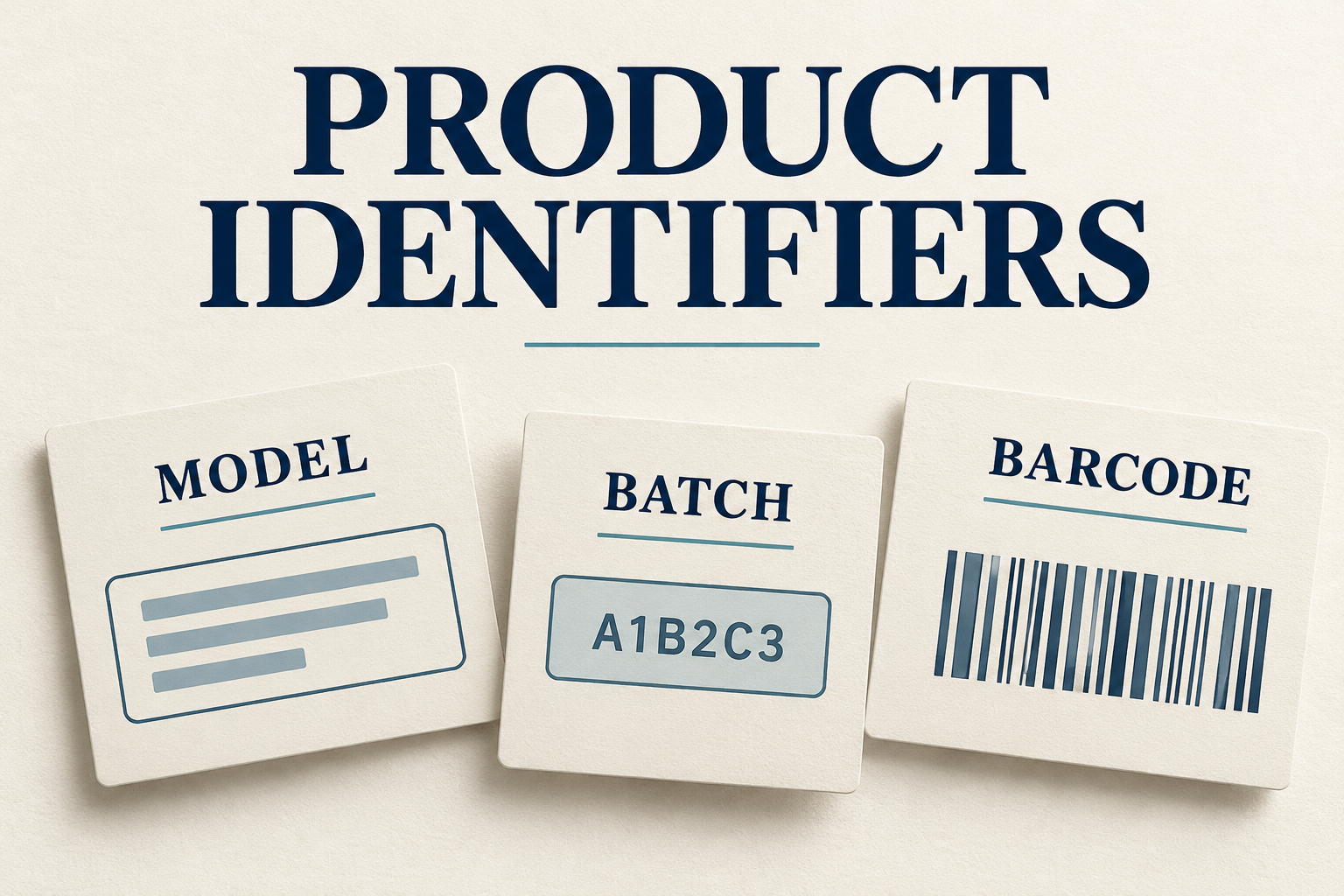
Product packaging may carry several identifiers. Keeping them separate makes it easier to locate the correct instructions or ask a precise question about a notice.
Model identifiers describe a version
A model name or number generally distinguishes a product version. Record every suffix, capacity designation and revision printed beside it. Do not shorten the name before comparing it with a manual. Two products with a shared brand name may require different documents.
Batch and lot codes identify production groups
Look for wording such as lot or batch. The manufacturer determines the coding system, so an unexplained sequence should not be decoded by guesswork. A printed date may be a manufacturing, packaging or other date; its meaning needs confirmation.
Barcodes serve a different purpose
A retail barcode may identify a product listing without establishing its individual production batch. Do not assume that scanning it verifies authenticity or confirms that a particular unit falls outside a recall.
Build a simple identification record
Create separate fields for the brand, complete model, batch code, labelled date and document version. Preserve a photograph of the label for your own records. When sharing it, remove order labels or personal details that are unrelated to the question.
Use identifiers with official notices
Compare the record with the identifiers explicitly named in the notice. If one required code is missing or illegible, describe the limitation rather than claiming an exact match.
Further reference
Recalls.gov provides a starting point for official US recall research. Identifier formats vary; this article is not a universal decoding guide.
A fictional identification record
Consider a package carrying “Model A2,” “Lot L-104” and a barcode. Record those as three separate fields. If a notice names a lot range, the barcode is not a substitute for the lot field. If a manual covers Model A1, the shared brand name does not establish that it applies to A2.
These are invented examples, not real manufacturer codes. The purpose is to show how separate identifiers answer separate questions.
Handle unclear characters carefully
Letters and numbers can look similar on small labels. Preserve a clear photograph when possible and mark ambiguous characters rather than quietly correcting them. An uncertain character can matter when matching a notice.
Avoid entering a full order label or personal address into a public forum to ask about a product code. Share only the product information needed to resolve the question.
Questions to send to the responsible organisation
- Which field identifies the production batch?
- What does the labelled date mean?
- Which manual revision applies to this model?
- How should an unreadable identifier be handled?
Common questions
Can an unfamiliar code be decoded from its appearance?
Not reliably without the coding convention. A plausible-looking date interpretation is still an assumption.
Does a readable barcode establish authenticity?
Readability establishes that a scanner could interpret a pattern. A stronger conclusion needs appropriate supporting evidence.
Should identifiers be shortened in a summary?
Keep the complete wording in the record. Abbreviations can hide a version or suffix that matters.
Related reading
- Understanding Vape Product Labels: A Consumer Information Guide
- How to Check Official Product Recall Notices
- QR Codes on Packaging: How to Evaluate the Destination
Editorial note: Prepared with AI assistance as an educational draft. No hands-on product testing or medical review is claimed.